
by Jordan Green
I knew we were lucky when my four year-old daughter, Lana, and I moved to Southwest Portland. We were mere blocks from a grocery store, an elementary school, a disc golf course, and a bridge over a creek. There were 32 children between the ages of two and six on our street. The house was a corner lot, found at the last minute by friends. It reminded me of a blend of every house I’ve lived in. It was a soft landing for a new widower, but I didn’t yet know the full richness of the gift.
I didn’t yet know Linda.
Linda lived next door. When I met her I saw her as a woman of regality, with graying hair and intelligent eyes. She walked with a cane. She volunteered at the farmer’s market, took art classes at the community center, wrote poetry, and lived just downstairs from her daughter, Aletha, her son-in-law, Steve, and two grandchildren, Sam and Andy. She offered right away to watch our cats.
Ever since, Linda has watched our cats plenty. She cheered me up through many chats, borrowed and discussed novels, taught Lana about thoughtful communication, and reminded me gently when my registration tags expired. She was the ultimate neighbor.
Linda is still there, but as of last spring, after twelve years, we don’t live next door anymore. We moved a quarter-mile away, so Linda can still watch our cats, but she’s no longer posted up 30 yards away, and I miss her steady presence. Moving to a new place, with a new batch of neighbors, got me considering how well Linda exemplifies Jesus’ second commandment. We were thoroughly cared for by her, so a question rose to mind:
How exactly did Linda get so good at caring for others?
So I decided to ask, and she stopped by our new place to chat on the deck, and that’s where I learned where that care flows from, and more of Linda’s story.
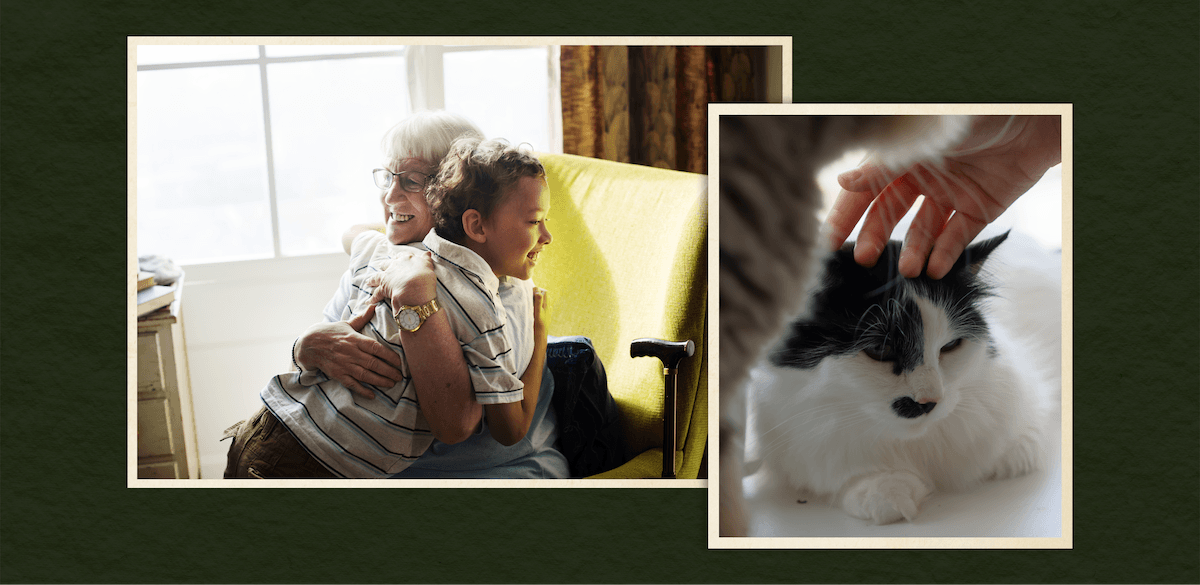
Let’s start with her vocation: early childhood development.
One of the first things I noticed about Linda was her skill in talking with Lana. She asked thorough questions, listened thoughtfully, and remarked on Lana’s observations. I appreciated how she patiently honored my daughter’s time and intellect.
“I can't not talk to the kids. You know, define what's going on, what’s happening right there. Or describe what they're doing. Like he’ll be playing with blocks. I’ll say, ‘We've got a yellow block, or you got a yellow square…’”
From a lifetime of childcare, Linda knows words are building blocks. So she narrates the action with simple terms, but she also adds new layers.
“I use language that is way beyond a two year-old's capacity to understand. But the intent of the language and the words I choose helps make it real for them. Even though they don't understand it yet, they will.”

When you can call up your next door neighbor any time, and she’s there to feed your animals when you’re going out of town, or provide a key when you’re locked out, that’s an ideal place to land, sure, but if you’re anything like me you may start to feel a little guilty. What could I offer Linda in return? But whenever I’d ask, she’d wave me off, explaining that she loves caring for our cats and looks forward to feeding them.
Considering her care for children and animals, I ask where this trait stems from.
“Probably my dad,” she says.
Linda’s father was a shopkeeper in Columbia City, a small town tucked between the Tualatin Mountains and the mighty Columbia River, about an hour north of Portland. The town, established on logging and shipbuilding, was starting to fade by the midcentury, when Linda arrived. She estimates around 500 people lived there at the time, and as the main shopkeeper, her dad was central to the community. He’d often erase customer tabs if they couldn’t pay, or take trades as payment. He loved life of every sort, especially animals, and the family kept them of all kinds.
When Linda was old enough, she worked in the shop, too, and she found purpose and meaning in the store’s centrality to her community. Through high school, she served customers much like her father did, then set off for the University of Oregon in Eugene. She quickly landed on sociology as a major.
“What drew you to that field?” I ask.
She shrugs because the answer is easy.
“People.”
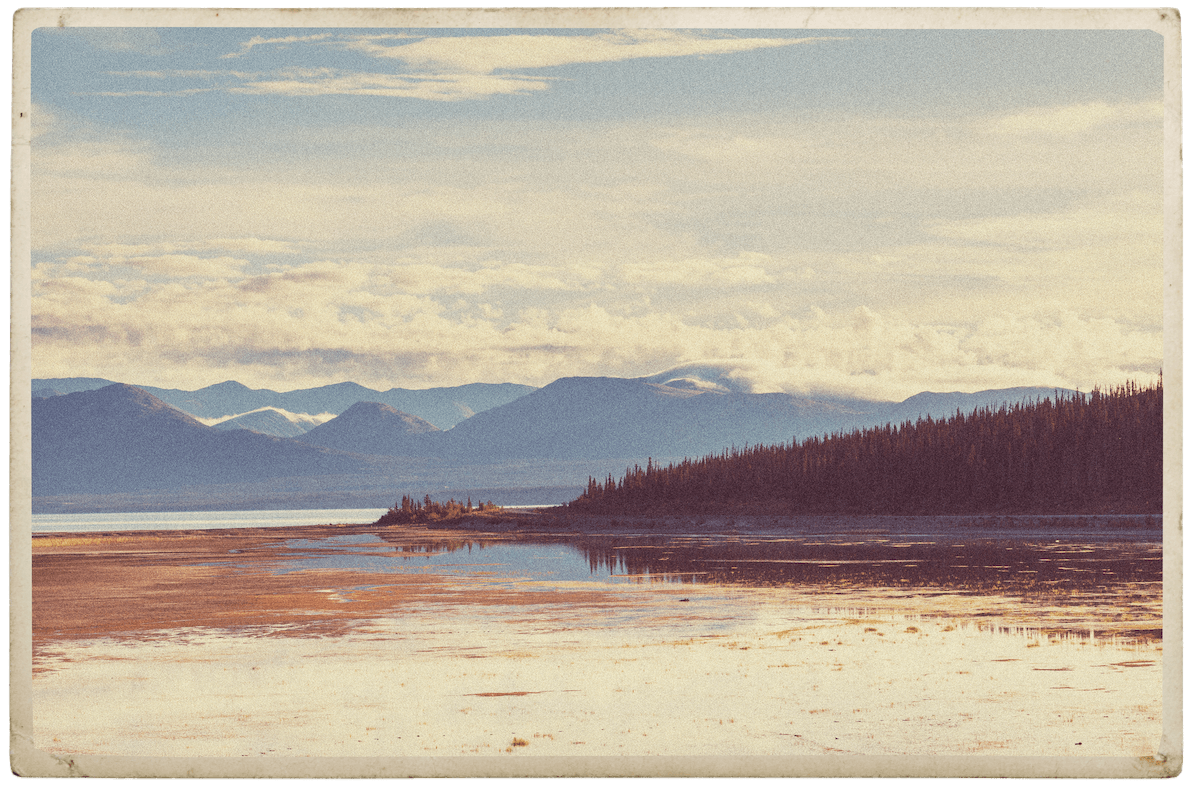
In 1967, Linda and her husband moved to Dillingham, a town on the shores of Alaska’s remote Bristol Bay. The teaching staff of the town had almost completely turned over, and the couple arrived along with fresh reinforcements, all young folks eager to explore the nation’s newest state. Arriving together in such a vast frontier bonded them, and it was there that Linda learned to fly in a Cessna 150.
“You just flew out over the tundra. One of my best memories is having swans flying hundreds of feet below me.”
The landscape was vast, and opportunities abounded. From Dillingham, the couple moved to Nome, where Linda gave birth to their daughter, Aletha, but they weren’t there long before Linda’s husband found work as a counselor in Seward. Between the cold fjord of Resurrection Bay and the Kenai Mountains flying got more complicated, so Linda took to caring for horses. She set about building community, raising her daughter, adopting two more children, Mark and Katy, and falling backward into her vocation.
The path started with the adoption. Mark and Katy required unique care, which pushed Linda to read everything she could on the field of early childcare. Soon she noticed others' needs around them. Alaska’s unique frontier needs meant there were lots of young parents who had to work.
“And a friend of mine said, well, why don't you start childcare for the Vocational Training Center? And so I just fell into it, and it just kind of kept becoming my career.”
That career flourished, the children grew, and Linda kept weaving together communities like she’d learned so well to do.
Then, after fifteen years in Seward, everything started to crumble.
It began with a combination of things: the isolation and Alaska’s dark, long winters, stresses over her growing children, and a stoic husband unwilling to share his inner world with her. Linda felt washed over by a “storm of sadness.”
She filed for a divorce. In a small community the direct effects were swift.
“When there’s divorce, people choose one side or the other. They all chose one side.”
“My best friend there left. She had moved away already, and the other one was just about to leave. So there wasn't…I had no bonded connections there.”
“The community shifted to his side. And I had no community at all. So there was no point in my staying.”
In the wake of this isolation and loss, Linda returned to the lower 48 and lived near her mom outside Bremerton, Washington. But such a loss isn’t simple to shake, and Linda found herself with time to reflect and regret.
She missed the dramatic Alaskan landscape. She missed the people.
Most of all she missed her family.
“My life’s expectations and what life was weren’t meshed. And that’s the regret. If I went back now knowing what I know, I would have made a whole different choice. I would have been with the kids.”
By now Linda had earned a masters degree from a program through Bank Street College, which required only one month of in-person instruction in New York City. Then she found work caring for children on the military bases around Bremerton. The years passed, and while she’d visit, the possibility of moving back to Alaska felt further and further away.
“You leave a place and then you walk back in and are you going to be recognized? Is somebody going to say hello to you? Because you haven't been meshed in with what's going on, any changes … So you're a stranger from the outside. You're a visitor.”
Through Linda’s work with the military, the opportunity arose to care for the children of workers overseas, so she signed up for stints at facilities in Scotland and Cornwall. Though she didn’t plan to be there indefinitely, she approached her time in the UK with intention.
“I didn't want to become an expat and only hang out with the expats.”
“I lived in the community. I didn't ever live on base. I purposely did that, and some of the workers in the childcare center were nationals, so I got to know a lot of locals that way.”
Linda felt particular kinship with the Scots, and she later discovered she’d lived within a few miles from where her ancestors had settled centuries before, in a town north of Glasgow.
“I just thought that was kind of serendipity that I wound up there, that they were probably people traveling similar terrain to what I was seeing.”
She found Cornwall more of a lighthearted vacation hub, but she also saw the similarities between the two regions, both heavily steeped in Celtic culture, both fiercely independent and proud of their place.
Upon retirement Linda moved to Portland to help raise her grandchildren, Sam and Andy. She moved in downstairs, assuming the role of “nanny granny.”
“I knew I wasn't going to stay [in early childhood education] any longer, but just to come down here and take care of my grandbaby. Grandson. That was pretty darn cool. And being a grandparent is a whole different ballgame, you know. I’d go downstairs at night.”
In her daily caretaking, Linda discovered Andy’s learning was less language-focused, and more physical. He had a knack for duplicating action, so that’s how Linda taught him, and it’s become part of his makeup. He’s now a smart and resourceful young man who just spent the summer tending trails throughout the Cascades. Sam, by the way, is a doctor, and is building a family of her own.
Then Lana and I moved in.
“I was really vigilant. I wanted to be open and supportive of what your needs were.”
And Linda was. She reached out often, but she also wasn’t overbearing. She was our grandmother next door. While we talk, one of my cats, a big gray and insistent Maine coon named Cas, flops himself next to Linda to snooze and she scratches his back. It occurs to me that she’s our cats’ granny nanny too, the kind lady who cares for them when we’re off on adventures.
By now I understand Linda’s ethos of care––for animals, for children, for neighbors––stems from a multitude of aspects, from witnessing her own father’s altruism, from her own painful experiences of lost community, from working intentionally to be someone who looks out for others.
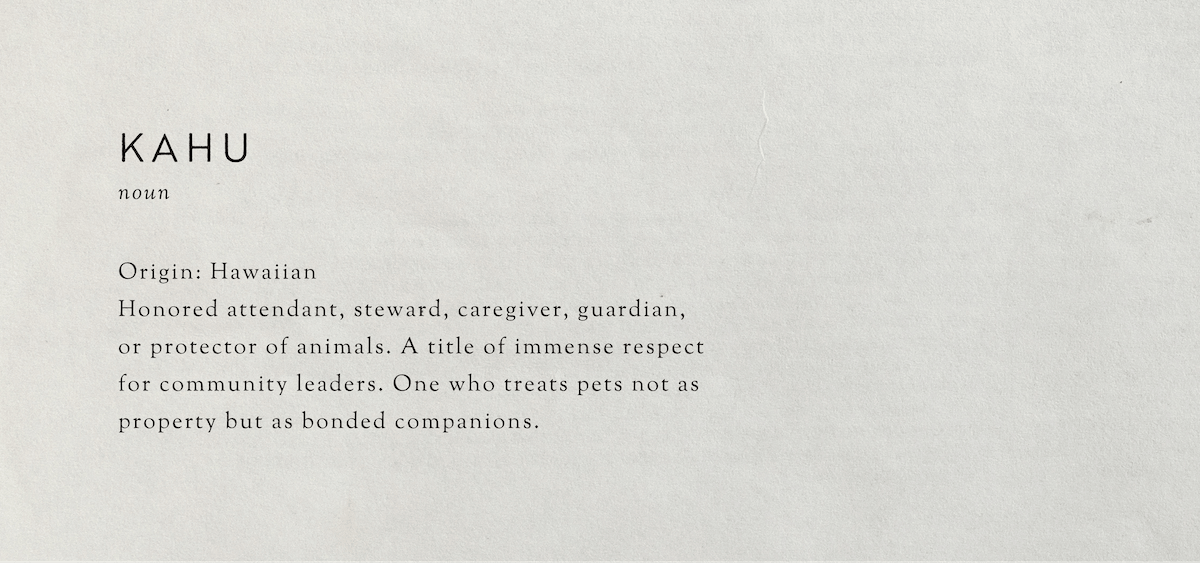
“There’s a word in Hawaiian––kahu––that means ‘steward,’ ‘caregiver,’ ‘defender of animals,’” she explains. “So you don't own these cats.
You're their kahu.
You're responsible for their life. Okay. That's how I feel that I am for anything.”
“I feed birds. I would feed the rats if it wasn’t nicer to have them outside. I don't particularly like the insect that bites me on my toe, but I don't want to kill it. I pick up worms off the sidewalk and put them in the grass when it's raining.”
This sums up how Linda lives, and it’s what I so deeply admire. She finds creatures on the fringes, recognizes who needs tending, draws them in like a mother hen, and shields them for a while from the storm. That’s what she did for us.
That Linda’s philosophy could be summed up in kahu is also a testament to her love of language, an ongoing curiosity about words, and a passion for instilling that curiosity in others. It’s part of what we connect on most, and I notice how Linda turns words over, considering what she’s just said, clarifying with another word to capture the idea more clearly. It makes sense to me that she’s a poet.
“Being able to express myself in a way that isn't linear necessarily, isn't prescribed.
I'm just having a great time learning new words and using them.”
“In English class, you have to write things this way and you have to put periods there and you have to put a comma in there and you have to use these words. I got even more precise when I was working with the military because you have to say the right things clearly. And so poetry is much freer.”
Summer Dream
A delicate mist-colored feather
drifts on a garden thermal
across short damp grasses
lifts settles lifts again
A dream of summer’s wishes
falling ever closer a slight shiver
resting and becoming
a moment’s fading memory
Precious Life
Oh, girl!
You think you’ve got it bad?
Ok, your dad died when
You were 19, barely an adult,
A mother bound in
Near-crippling loss,
A drive to become
With no guide
And here you are
A few mis-steps along the way
That taught you how to survive
And thrive, how to strive for
A life worth every wound
Every joy, every moment
To be present now
To create and treasure
The precious life you have.
I ask Linda about the legacy she’d like to leave behind and she tells me her poems and her bear collection, but I know, of course, that Linda will leave behind far more than that, a patchwork of people and communities who are richer for having her mend them for a while.